Tackling the Top Three Contaminants
In order to find markets for commingled recyclable materials, it’s crucial that the materials be as contaminant-free as possible. So what happens when a big glass pickle jar that break when the truck picks up the cart? What happens to the rest of the recyclables when garbage gets dumped in with the recycling? In most cases, that entire cart-full of recycling has to be disposed of. Or worse — if that cart load contaminates other cart loads, a lot of potentially recyclable materials can no longer be recycled. That’s why it’s so important to recycle right.
The better the recycling stream, the better the recycling results
When performing random recycling audits on the materials coming in from our curbside commingled recycling program, we noticed the same contaminants showing up in the roll carts — three materials that can really mess up the commingled recycling stream. Here’s a look at the Top 3 contaminants — including the background on why they belong in the black-lid trash cart and not in the recycling.
Removing the Top 3 Contaminants
No Plastic Bags: No loose plastic bags of any kind can go in your recycling cart, and please don’t put your other recycling inside a plastic bag either. Plastic bags jam the recycling equipment.
No Freezer Boxes: The chemical wax-like coating designed to protect the food inside of freezer boxes means they can’t be recycled. So freezer boxes belong in the trash.
No Garbage: Sounds simple enough — trash goes in the trash cart. Yet more than 10% of what we find in the recycling cart is trash. When in doubt, throw it out rather than contaminating the recycling stream.
Collecting the materials we can recycle
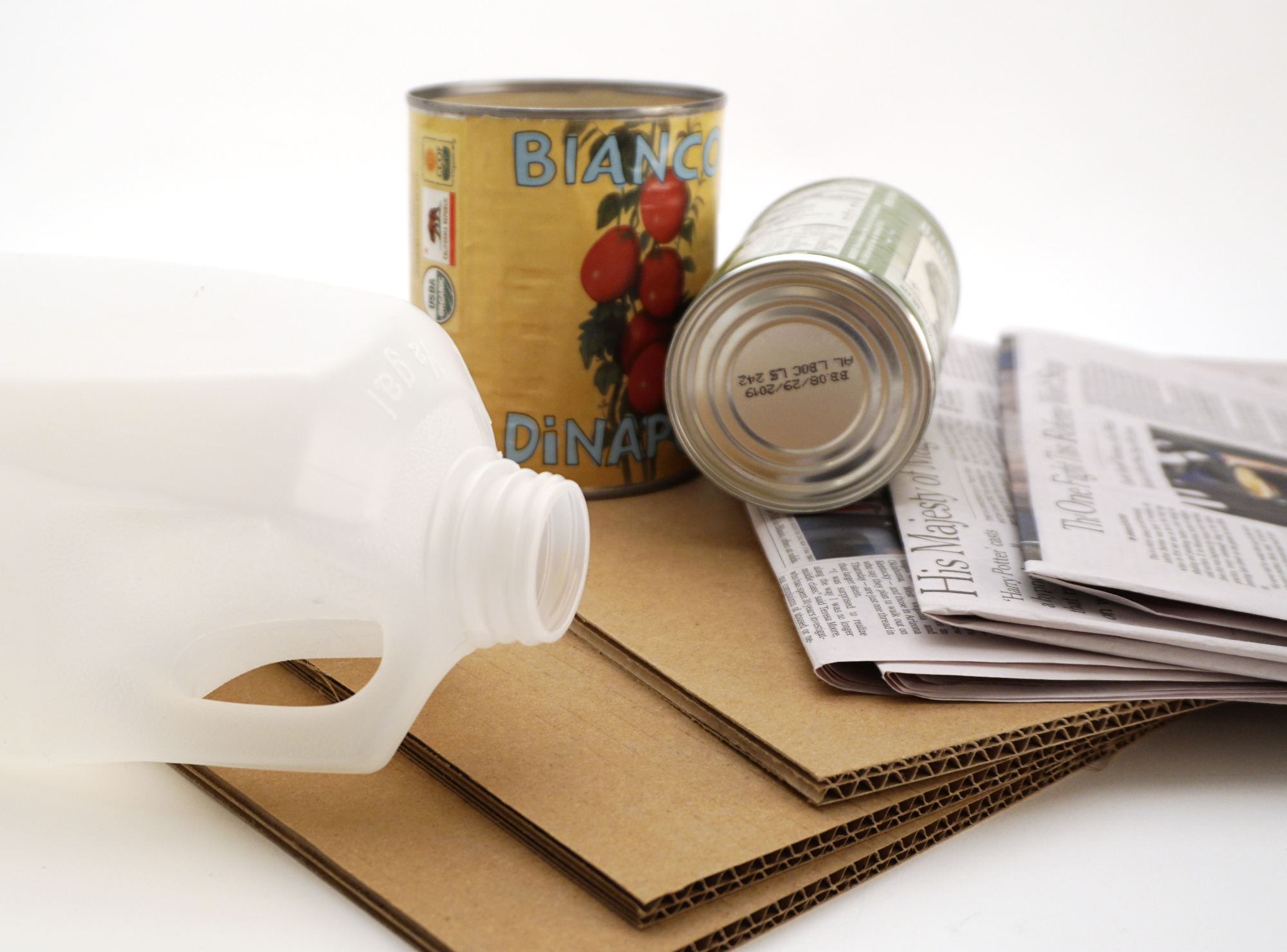
Our goal is to recycle as much of the materials we collect as possible. So when China — long the world’s largest market for recyclable materials — essentially restricted the import of most waste materials from foreign countries last year, we quickly adapted by finding a handful of domestic markets willing to accept specific recyclable materials. But in order for the American processors to accept the materials, they have to be as contaminant-free as possible. That’s where you come in! By making sure only acceptable items go into your curbside recycling cart, we have a much higher chance of making sure those materials are all properly recycled.
Additional recycling options beyond the curb.
Knowing there are some types of materials that can only be sent to market for recycling if they are kept separate from the curbside commingled recycling stream, we added glass-only recycling depots at local grocery stores to keep breakable glass away from other materials. And finally, we established special recycling areas at the Transfer Station where anyone can drop off the same items we accept curbside, as well as additional items that can be collected separately.
At the Transfer Station
The following materials can be dropped-off separately at the Transfer Station:
- Flattened Corrugated Cardboard (The kind with the wavy center)
- Aluminum Foil & Pressed Foil (Empty and dry)
- Glass Bottles & Jars (Any color, up to 1-gallon, rinsed out, no lids, labels OK)
- Plastic Tub Lids (Clean and dry lids from items like yogurt, salsa, and other containers)
- Plastic Buckets & Pails (Lids OK. No containers that held automotive fluids, pesticides, herbicides, or hazardous materials)
- Shredded Paper (In a paper bag rolled or stapled shut)
- Plastic Bags & Stretchy Plastics (Empty and dry)
- Rigid Plastic Package Handles (Such as 6-pack handles)
At Grocery Store Glass Recycling Depots
You can drop off glass bottles and jars — any color, up to 1 gallon with no lids — for recycling at Rogue Disposal & Recycling glass depots in the parking lots of several area businesses:
- Ray's Food Place (Central Point & Jacksonville)
- Sherm's Food4 Less (Medford)
- Sherm's Thunderbird (Medford)
- Rogue Credit Union (East Medford Branch)
At the BottleDrop Center
You can take your redeemable beverage containers — glass, plastic and aluminum — to the BottleDrop Redemption Center in Medford where they’re worth 10¢ each.
Share This